The "Plug-and-Play" Asset: How Zero TI is redefining the speed of leasing
By Robert Kroon
Is your floorplate an asset or an anchor?
In a market where speed-to-market is the only metric that matters, the traditional "build-out" model is officially a liability. Every time a wall is moved or a floor is trenched for power, your ROI takes a hit and your vacancy clock keeps ticking.
The Zero TI concept isn't just a design trend; it’s a financial strategy that strips away the friction of traditional construction. By keeping the floorplate clean and the infrastructure intelligent, you turn a static building into a dynamic service.
The Anatomy of a Zero TI Space
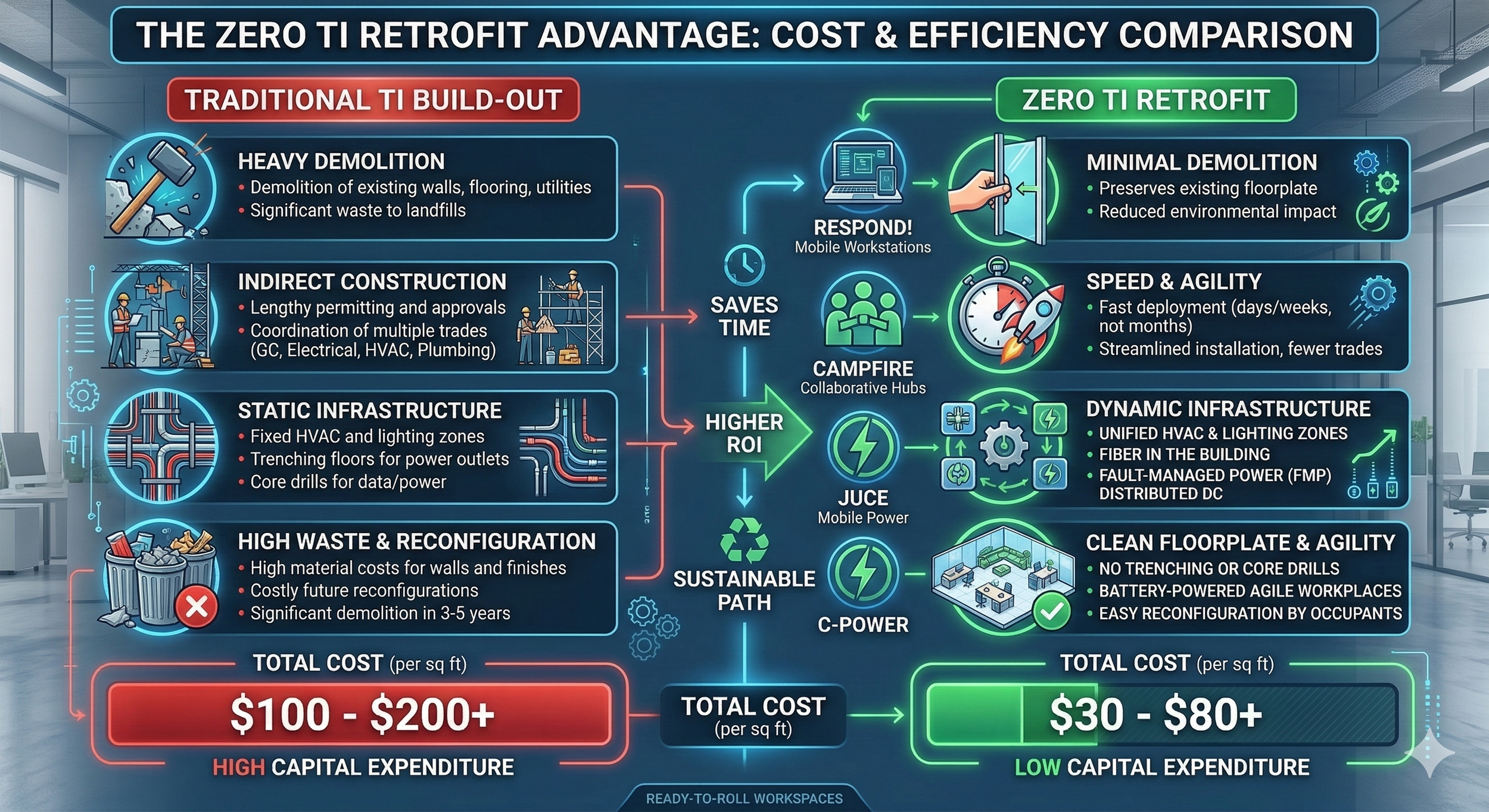
The Clean Floorplate: No more core drills or trenching. By keeping the floor unobstructed, you maintain 100% layout flexibility for the next tenant.
Unified Zones: When your HVAC and lighting zones are identical, you simplify building management systems (BMS) and ensure comfort remains consistent, regardless of how the furniture is arranged.
Fiber to the Core: High-speed connectivity is the "last mile" of the modern retrofit. Once fiber is in the building, the data bottleneck disappears.
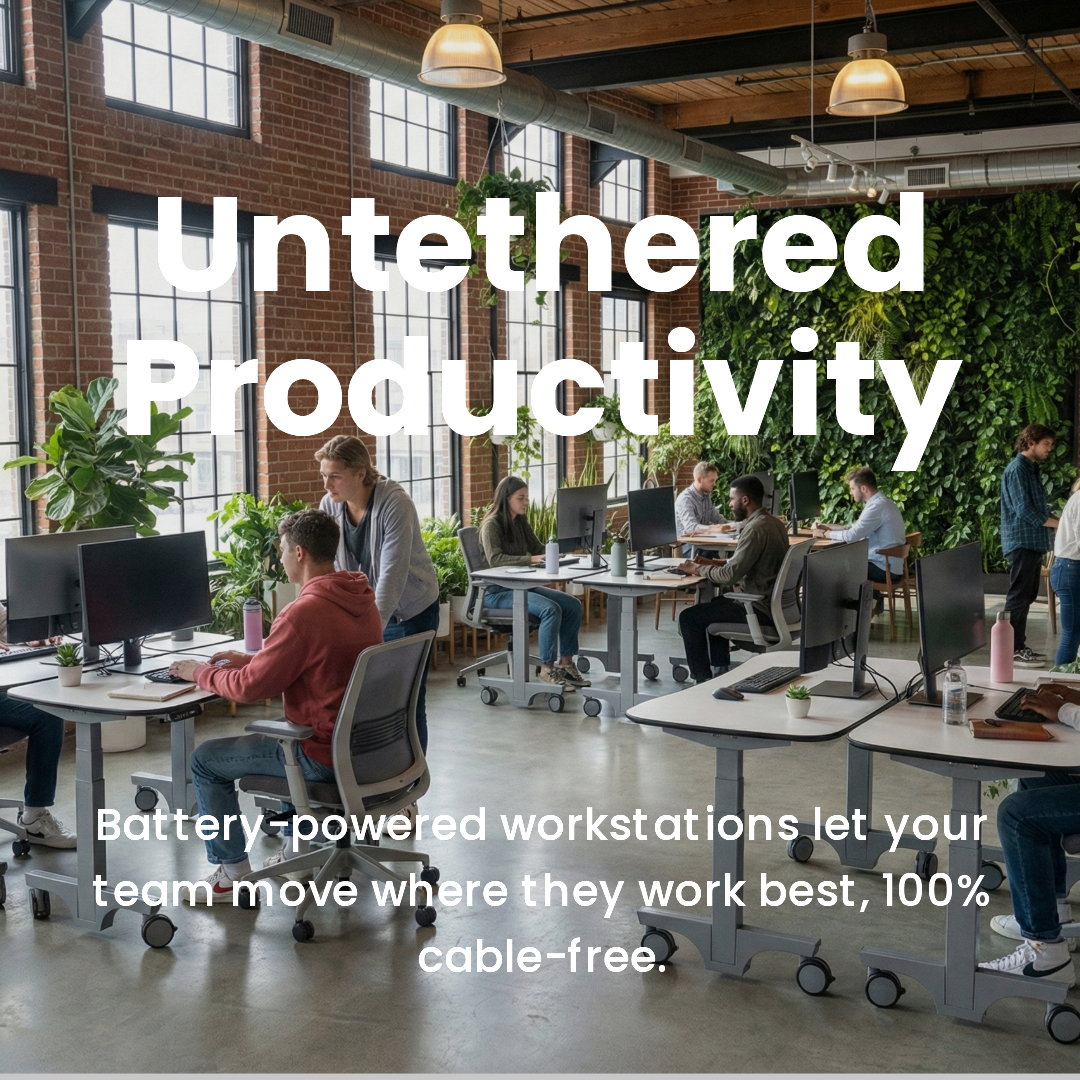
Battery-Powered Agile Workplaces: This is where the magic happens. By utilizing technologies such as fault-managed power (FMP) and battery-powered Agile Furniture, you decouple the desk from the wall.
Why This Wins for Asset Managers
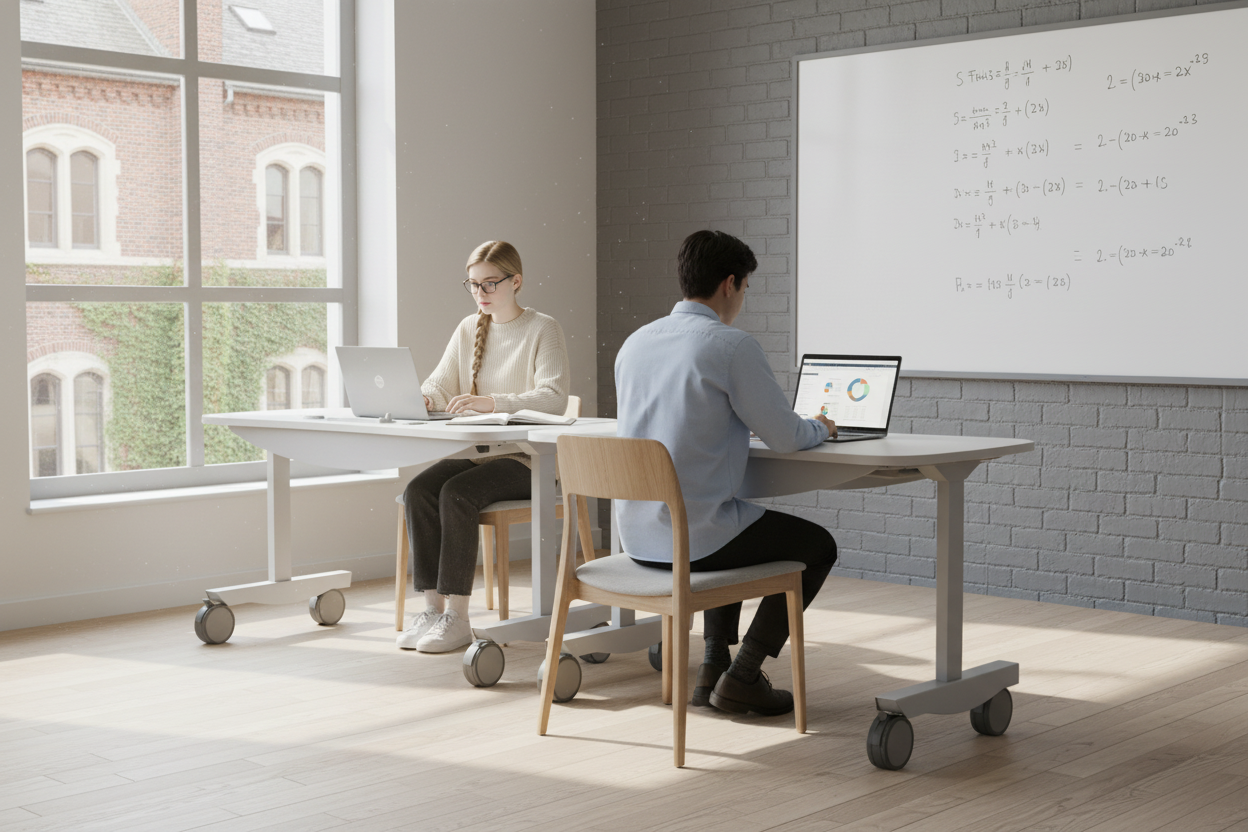
Battery-powered mobile furniture lets workers configure workstations in any fashion.
Reduced Capital Outlay: Stop spending money on "disposable" infrastructure.
Instant Scalability: Tenants can reconfigure their entire department in an afternoon—not a month.
Sustainability: Zero TI means zero demolition waste. It is the most direct path to a circular economy in commercial real estate.
By deploying solutions like Respond! for mobile workstations, CampFire for collaborative hubs, and Juce for mobile power and monitor support, you provide a workspace that is literally "ready to roll." Add in C-Power for dedicated DC charging, and you have a facility that anticipates the needs of the modern workforce without the heavy construction costs.
The future of the workplace isn't built; it’s deployed.