The Collision of AI and Hybrid: Why Static Offices Are Becoming Stranded Assets
By Robert Kroon
Most pre-pandemic office designs are obsolete. Hybrid work and AI mandates require a different approach.
In commercial real estate and facility management, we are currently witnessing a collision between two massive tectonic shifts.
On one side, we have Mandated AI Proficiency, where employers are aggressively upskilling teams to leverage automation and augmentation. On the other, we have the solidified reality of Hybrid Work Models, which have fundamentally broken the traditional "one-bum-per-seat" metric of office utilization.
Are these trends in conflict? No. In fact, they are mutually reinforcing.
However, they share a common enemy: The Static Office.
If your building was designed for the workflows of 2019, it is not just outdated; it is rapidly becoming a financial liability. To survive this convergence, we must stop building "offices" and start designing Agile Workplaces.
The Hybrid Shift: From Presence to Purpose
The Hybrid Work model is the most immediate driver of physical change. It has stripped away the concept of the office as a place for mere presence. Employees no longer commute to sit in a cubicle and answer emails—they can do that from their kitchen table.
They come to the office for purpose: specifically, complex collaboration, social connection, and high-bandwidth innovation.
The Financial Impact: From an asset management perspective, Hybrid Work creates a utilization crisis. Large floor plates filled with assigned desks are now ghost towns three days a week. This is wasted capital. The goal isn't just to "make the office nice"; it is to reduce your real estate footprint while simultaneously increasing the utilization density of the space you keep.
The AI Shift: From Creation to Curation
While Hybrid Work dictates where we work, AI Proficiency dictates how we work.
As AI takes over routine data entry and basic drafting, the human role shifts from creation to curation, direction, and critical evaluation. This changes the physical requirements of the room.
We need less: Standard clerical workstations.
We need more: High-tech "war rooms" for team strategy, private sound-proofed booths for voice-driven AI interaction, and flexible training areas for continuous upskilling.
The Solution: The Agile Workplace
The facility design team’s reaction to these converging trends cannot be "wait and see." It must be a proactive move toward agility.
The only way to accommodate the fluctuating attendance of Hybrid Work and the evolving infrastructure needs of AI is to decouple your layout from the building shell.
Design for Fluidity, Not Permanence
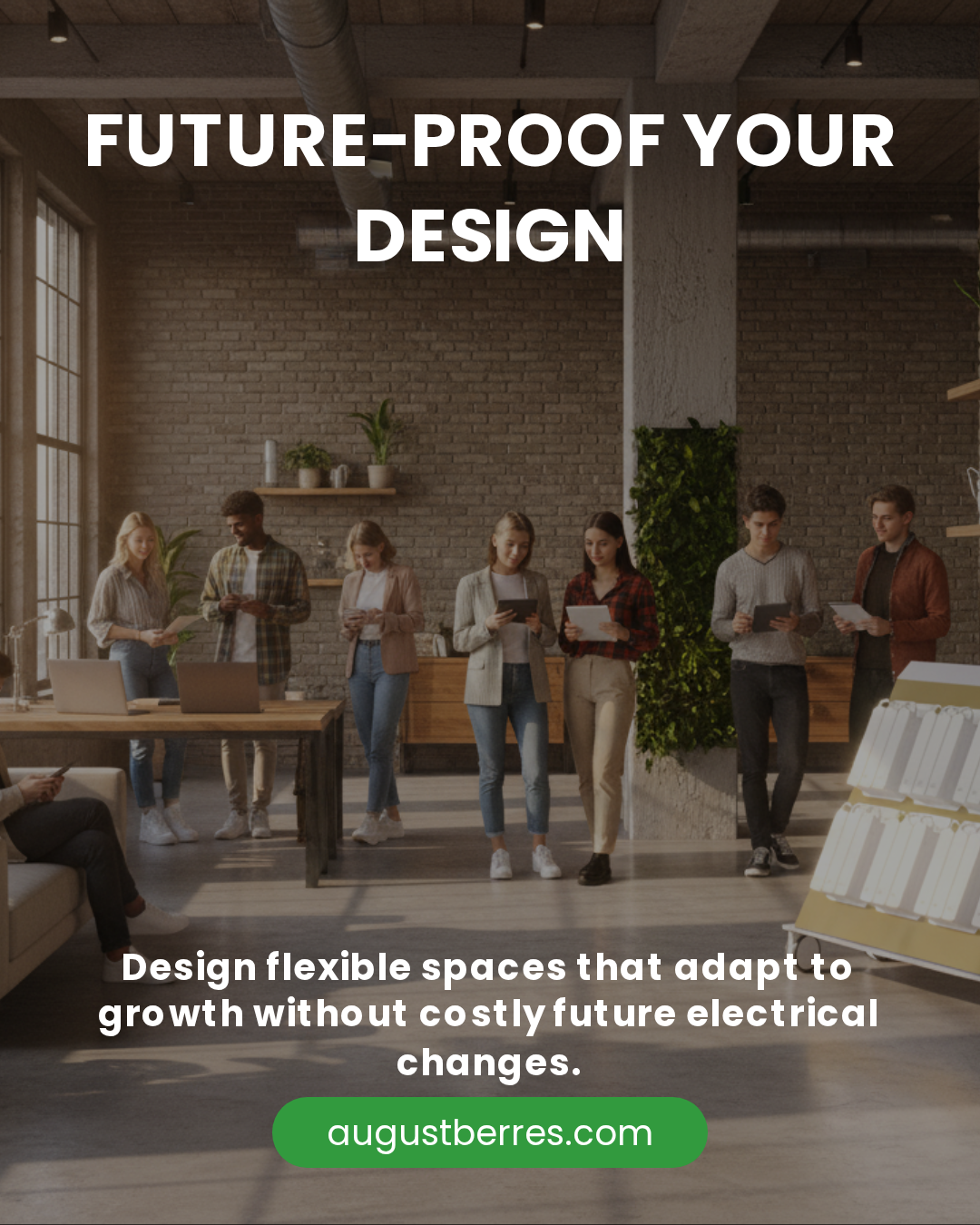
The modern tenant needs a space that can transform from a town hall meeting in the morning to three separate project team pods in the afternoon. Traditional construction—drywall, core drilling, and fixed wiring—is too slow and too expensive (high TI costs) to support this frequency of change.
The Financial Logic of "Un-tethering"
To create a truly Agile Workplace, we must eliminate the physical tethers that lock furniture to specific locations. This is where the financial benefits of modern infrastructure shine.
By leveraging technologies such as fault-managed power (FMP) and battery-powered Agile Furniture, you eliminate the need to trench concrete or drop power poles every time a team creates a new workflow.
Reduced Capital Expenditure: Drastically lower the cost of initial fit-outs and subsequent renovations.
Asset Value: A building that can adapt to tenant needs without major construction downtime is inherently more valuable and commands better lease terms.
Tenant Satisfaction: You provide a seamless, high-tech experience where power and connectivity are available everywhere, supporting the intense IT demands of an AI-proficient workforce.
The Bottom Line
The convergence of AI and Hybrid work is not a trend you can design around. It is the new baseline.
Facilities that remain static—bound by fixed wiring and rigid floorplans—will fail to support the productivity gains AI promises and the flexibility Hybrid work demands.
By embracing an Agile Workplace strategy, you are not just buying furniture or upgrading power systems. You are securing a more profitable, valuable, and tenant-friendly asset that is ready for whatever the future of work demands.