


Changing floorplates as fast as the companies on them.
August Berres makes furniture powered by removable batteries, allowing an office building’s floors to change layout without rewiring or construction.
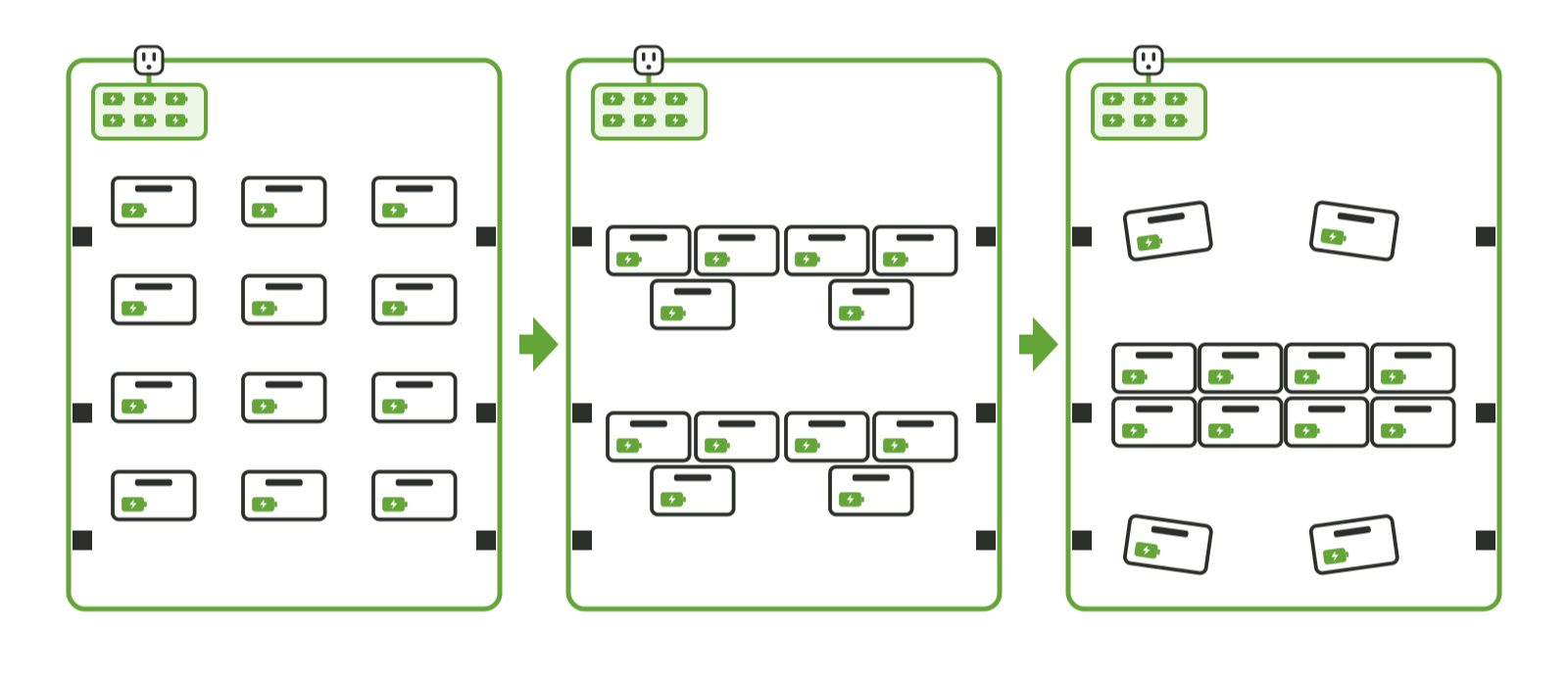
One floor, three layouts, nothing rewired.
Why a floor can't keep up with a company.
A floor can't keep up with a company because its power is fixed to one layout. Outlets, power poles, and floor boxes are placed for the last tenant's plan, so every new plan means rebuilding the floor's power. That work is called tenant improvement: the construction and rewiring that fit a floor out for a new tenant. It can take longer than the deal cycle itself, and it comes back with every turnover.
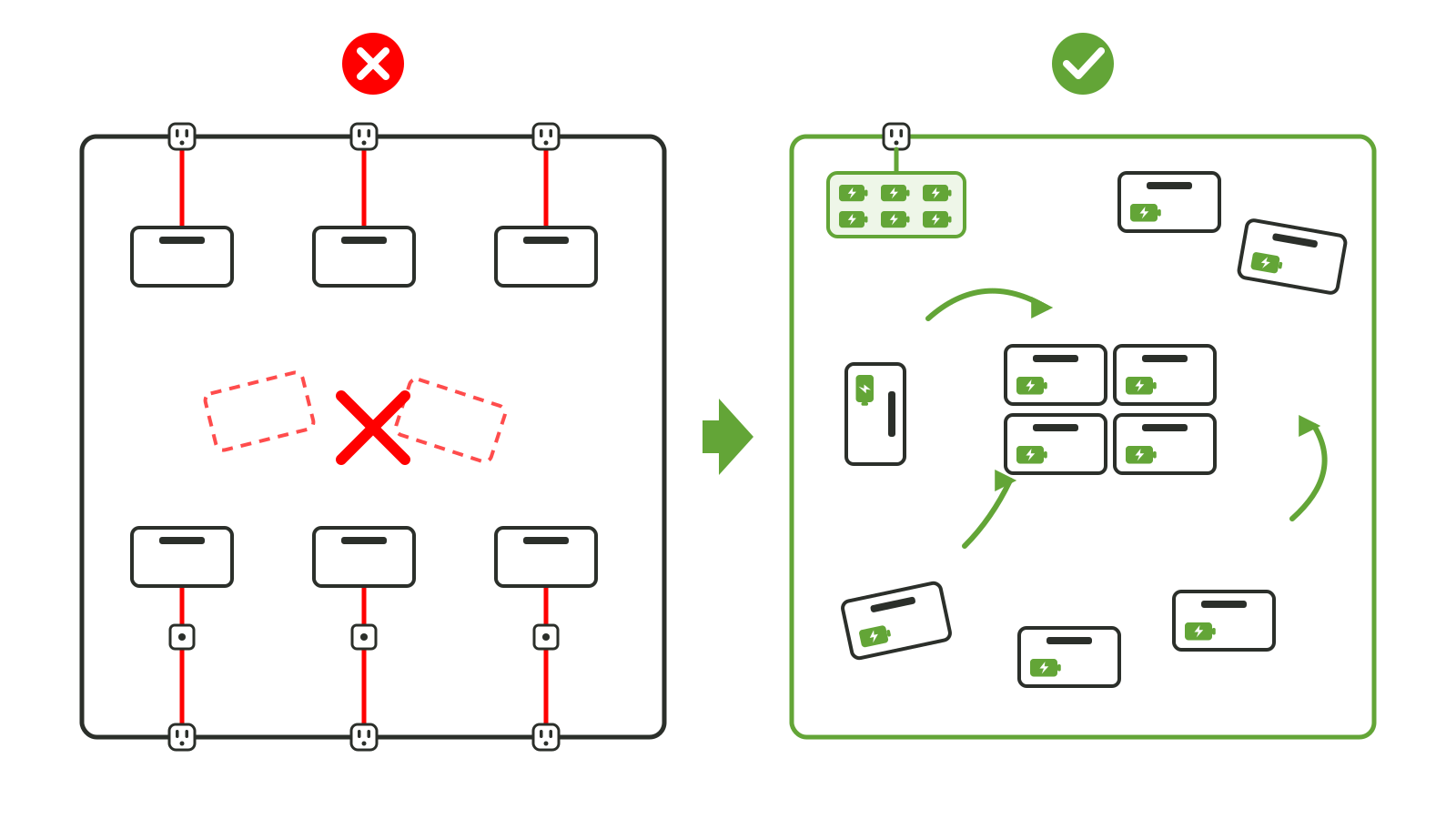
Fixed power commits a floor to one layout. Furniture that carries its own power lets the layout change.
Furniture that carries its own power.
August Berres makes desks and tables that run on removable batteries, with charging stations that keep those batteries ready. Together, they create an Agile Workplace: a workplace that can be reconfigured without changes to the building's infrastructure, especially its electrical wiring.
The batteries dock into the furniture without tools. When one runs down, a person swaps in a charged one and the furniture keeps running. The charging stations can sit anywhere on the floor and need only a single AC receptacle, so nothing in the floor or ceiling has to change.
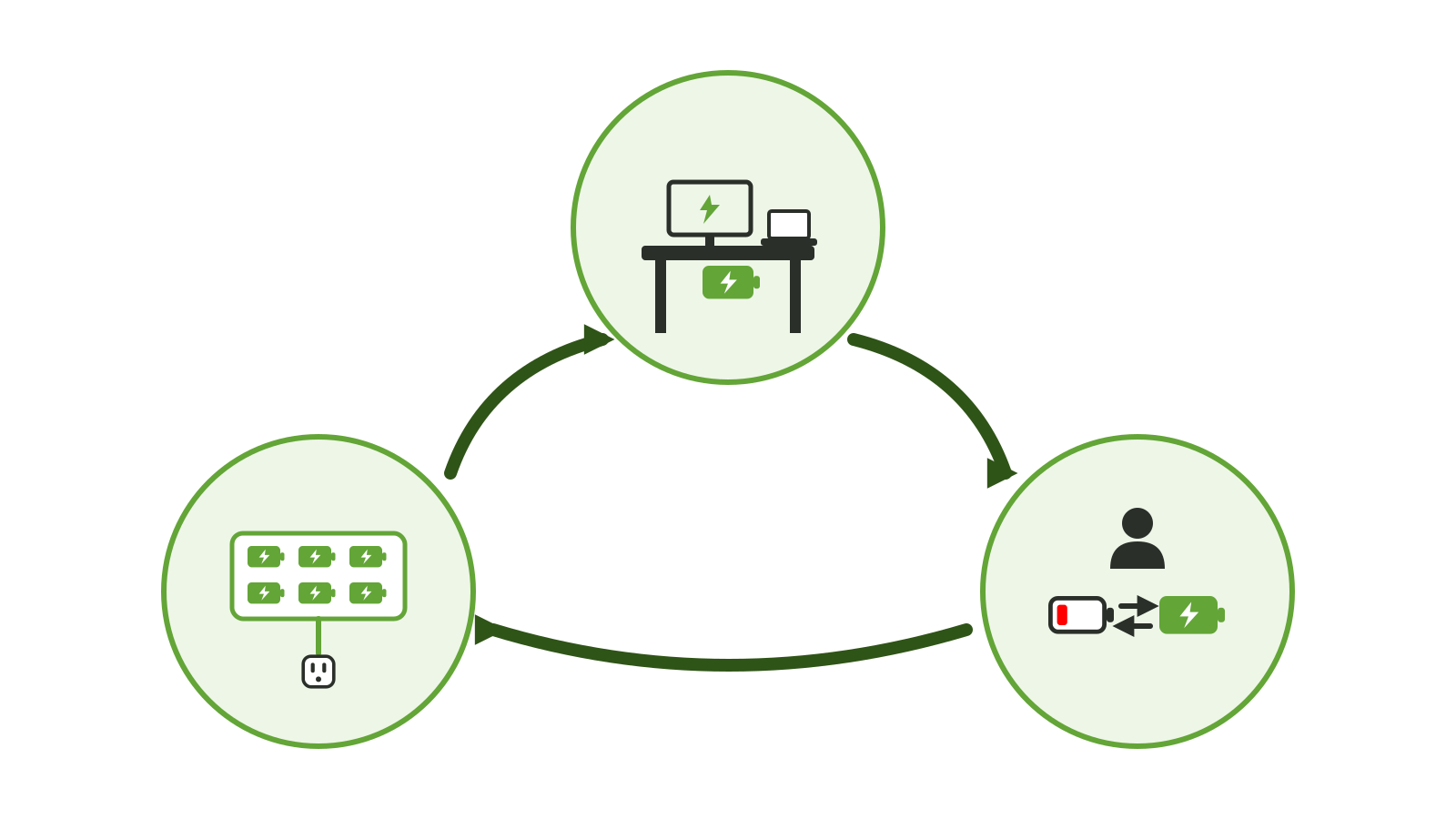
Dock, swap, recharge: the furniture keeps running while batteries cycle through a charging station.
Four products make up the system:
C-Power is the removable battery. It docks into a desk, table, or cart without tools.
Juce is the set of charging stations that recharge C-Power batteries, and the carts that deliver power around the floor.
Respond! is a heavy-duty sit-stand desk with power at the worksurface for a laptop and multiple monitors, and no need to sit near an outlet.
CampFire is a collaboration table with a central power system that provides AC outlets and USB-C ports, in shapes that let everyone see each other.
What it means for you.
For owners and asset managers.
An owner can ready a floor for the next tenant without new construction by keeping the floorplate clean and letting the furniture carry the power. We call this Zero TI, short for zero tenant improvement. It is more than a way to avoid tenant improvement costs: it gives tenants the modern, flexible office they expect without the cost and delay of a build-out. One retrofit of the building shell, covering items such as HVAC, lighting, and acoustics, keeps the floorplate clean, and battery-powered furniture then supplies the layout and the power for each tenant. Later changes need no tenant improvement work, so tenants move in sooner and owners collect rent sooner, because no one is waiting on permits, build-outs, and inspections.
Zero TI requires discipline because there is usually no middle ground. Add one wall, and traditional tenant improvements come back; file for any kind of permit, and the Zero TI approach is over. Either a space can be occupied within days, or it can't.
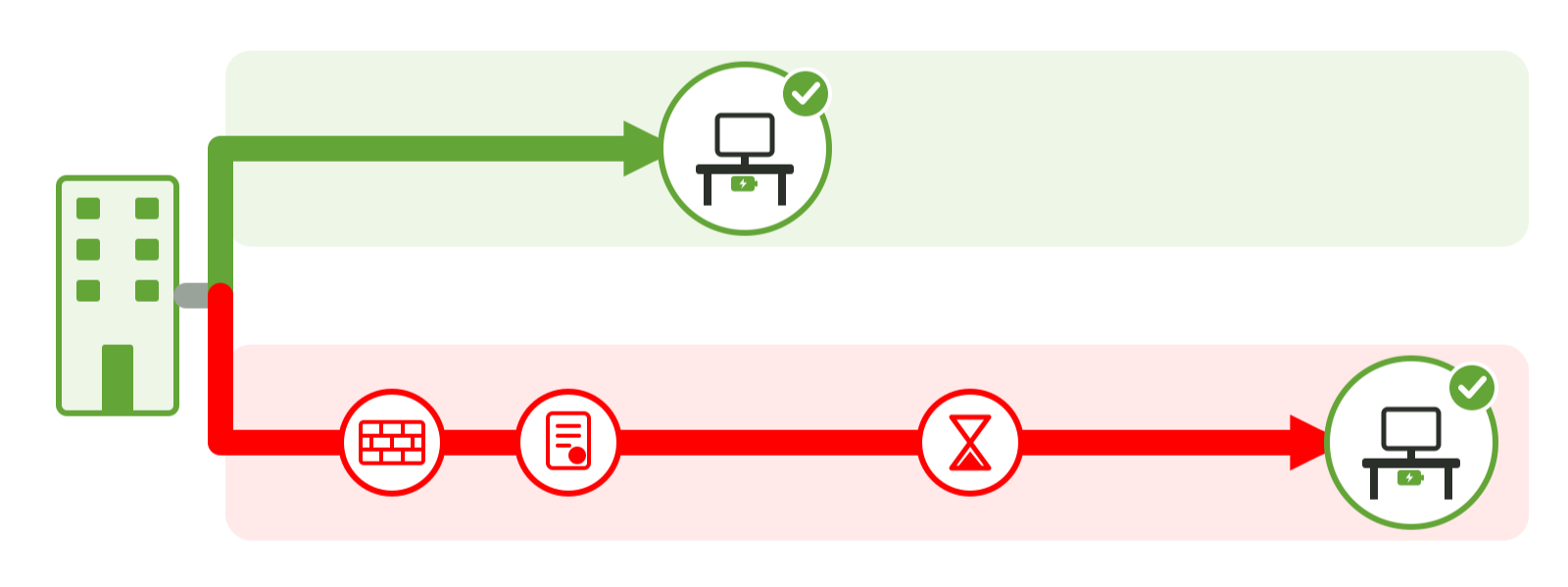
Zero TI takes discipline: add one wall or file any permit and traditional tenant improvements return.
For tenants
When a team grows or shrinks faster than planned, the layout adapts accordingly. Desks and tables can be moved wherever they’re needed, and their power moves with them, so changes don’t have to wait for electricians or construction. On a lease shorter than five years, tenant improvements are hard to recover, and furniture that comes with its own power avoids that expense.
The battery.
One C-Power battery is designed to run a laptop and a second monitor through a typical workday. Someone who needs extra swaps can insert a charged pack without tools, and the furniture keeps running.
Over its lifetime, C-Power is rated for 2,500 charge cycles with 70% of its usable capacity remaining and a 7-year service life.
C-Power costs more than cheaper batteries because it is designed for a long service life, not the lowest price. Each pack keeps back about one-sixth of its cells' rated energy at the top and bottom of the charge range, where lithium-ion cells wear fastest. Published aging studies show the same thing: keeping cells away from full charge and deep discharge slows wear. The fair comparison is cost over the service life, not the sticker price.
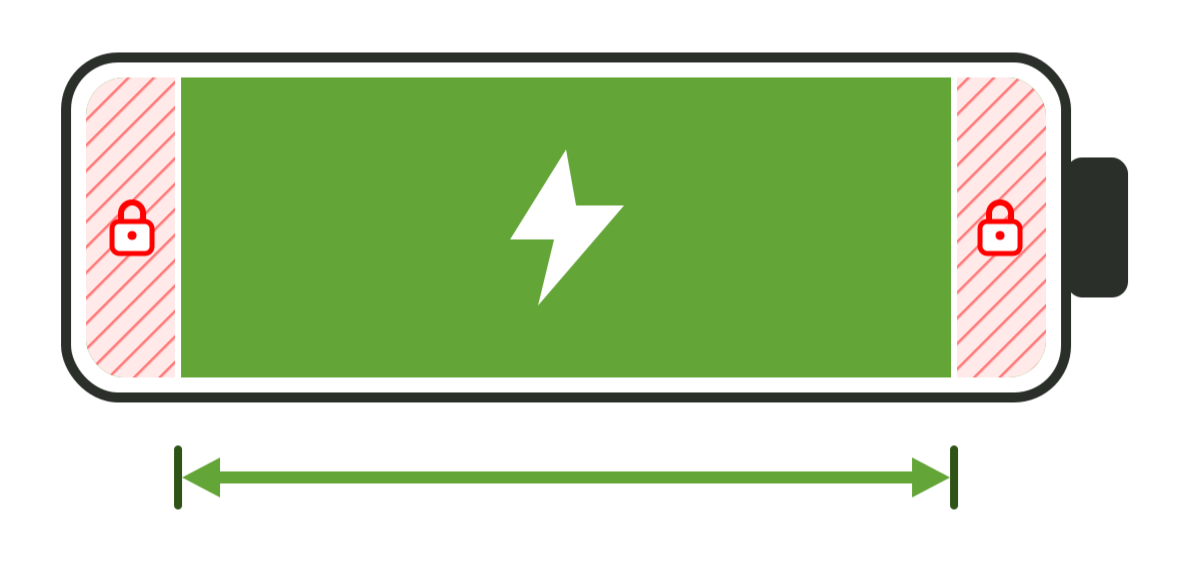
Each pack holds back capacity at both ends of the charge range to slow wear.
Common questions
How long does a C-Power battery last before it needs charging?
It is designed to run a laptop and a second monitor through a typical workday, and swapping them requires no tools.
How long does a C-Power battery last throughout its lifetime?
It is rated for 2,500 charge cycles with 70% usable capacity remaining and a 7-year service life.
Why does C-Power cost more than cheaper batteries?
It holds back part of its capacity at both ends of the charge range to slow wear, so its cost is best measured over its service life.
What is Zero TI?
A way to provide tenants with a modern, flexible office without the cost or delay of tenant improvements: retrofit the building shell once, then avoid tenant improvement work for future changes.
How can furniture be powered without floor or ceiling power?
Removable batteries dock into the furniture and recharge on charging stations that need only a single AC receptacle.